
For many women trying to conceive, the days after ovulation can feel exciting and emotional. One of the most common questions people ask is: when do pregnancy symptoms start after implantation bleeding? Understanding the early signs of pregnancy can help you recognize what your body may be experiencing during the earliest stages of conception.
Implantation bleeding occurs when a fertilized egg attaches itself to the lining of the uterus. This is one of the earliest events of pregnancy and often happens before a missed period. Some women notice symptoms almost immediately afterward, while others may not feel any changes for several weeks.
At the clinic of Dr Swati G Bhattacharjee, women receive compassionate guidance and expert care for fertility, pregnancy, and reproductive health concerns. Understanding early pregnancy signs can help reduce anxiety and support a healthier pregnancy journey.
What Is Implantation Bleeding?
Implantation bleeding is light spotting that may happen when the fertilized egg implants into the uterine wall. It usually occurs around 6 to 12 days after ovulation and fertilization. Unlike a regular menstrual period, implantation bleeding is generally lighter in color and flow.
Common characteristics include:
- Light pink or brown spotting
- Mild cramping
- Spotting lasting a few hours to 2 days
- No heavy clots or intense bleeding
Many women confuse implantation bleeding with an early period because the timing is similar. However, implantation bleeding is usually lighter and shorter.
When Do Pregnancy Symptoms Start After Implantation Bleeding?
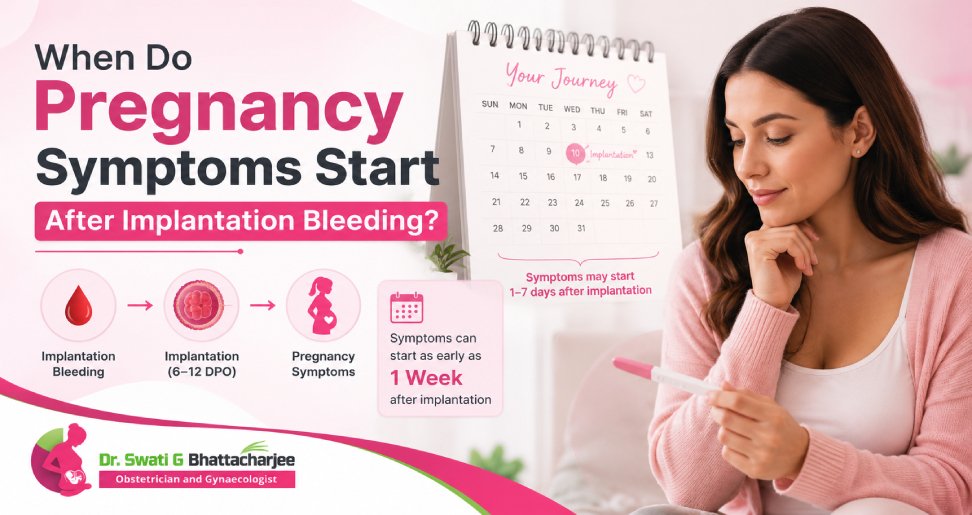
Pregnancy symptoms may begin a few days after implantation bleeding, although every woman’s body responds differently. Some women notice signs within 1 to 3 days after implantation, while others may not experience symptoms until after a missed period.
The body starts producing the hormone hCG (human chorionic gonadotropin) after implantation occurs. As hCG levels rise, early pregnancy symptoms may begin to appear.
Common early symptoms include:
- Breast tenderness
- Fatigue
- Nausea or morning sickness
- Frequent urination
- Mood swings
- Mild bloating
- Food cravings or aversions
Most women begin noticing clearer symptoms about one to two weeks after implantation bleeding. A pregnancy test usually becomes more accurate after a missed period because hCG levels are higher at that stage.
Understanding the 4 Stages of Implantation
Knowing the 4 stages of implantation can help you understand how pregnancy begins.
1. Fertilization
The process starts when the sperm successfully fertilizes the egg in the fallopian tube. This creates a zygote.
2. Cell Division
The fertilized egg divides into multiple cells while traveling toward the uterus. During this stage, it becomes a blastocyst.
3. Attachment to the Uterine Wall
The blastocyst attaches itself to the uterine lining. This step may cause light spotting known as implantation bleeding.
4. Hormonal Changes Begin
Once implantation is complete, the body begins producing hCG hormones that support pregnancy. This is when early symptoms often start appearing.
These stages are essential for a healthy pregnancy and usually occur within the first two weeks after ovulation.
Fertilization Symptoms Before Implantation
Some women wonder whether they can feel symptoms even before implantation happens. Although uncommon, a few women report subtle fertilization symptoms before implantation.
Possible early sensations may include:
- Mild pelvic discomfort
- Increased basal body temperature
- Fatigue
- Light bloating
- Heightened sense of smell
However, these symptoms are often caused by hormonal changes related to ovulation rather than pregnancy itself. True pregnancy symptoms usually begin only after implantation because the body does not produce pregnancy hormones beforehand.
Experts like Dr Swati G Bhattacharjee advise women not to rely solely on early symptoms and to confirm pregnancy through medical testing.
Positive Signs of Pregnancy After Implantation
Many women look for positive signs of pregnancy after implantation bleeding. While symptoms vary from person to person, several indicators commonly suggest early pregnancy.
Missed Period
A missed period is often the strongest and most noticeable early sign.
Breast Changes
Breasts may feel swollen, sore, or sensitive because of hormonal changes.
Fatigue
Increased progesterone levels can make women feel unusually tired.
Nausea
Morning sickness may begin as early as two weeks after implantation.
Frequent Urination
The body increases blood flow and hormone production, leading to more bathroom visits.
Mood Changes
Hormonal fluctuations may cause emotional sensitivity or mood swings.
Positive Pregnancy Test
A home pregnancy test becomes more reliable after a missed period.
If you experience several of these symptoms, consulting a healthcare professional can help confirm pregnancy and ensure proper prenatal care.
Unsuccessful Implantation Symptoms
Not every implantation process leads to pregnancy. Sometimes the fertilized egg does not successfully attach to the uterus. Understanding unsuccessful implantation symptoms can help women recognize what may be happening in their bodies.
Possible signs may include:
- A normal or slightly delayed menstrual period
- Mild cramping without pregnancy progression
- Negative pregnancy test
- Temporary spotting followed by menstruation
- Declining basal body temperature
An unsuccessful implantation may happen for several reasons, including hormonal imbalance, uterine conditions, or chromosomal abnormalities in the embryo.
Women who repeatedly experience implantation failure should seek medical advice from experienced specialists like Dr Swati G Bhattacharjee for a complete fertility evaluation and personalized treatment guidance.
How Soon Should You Take a Pregnancy Test?
Taking a pregnancy test too early may produce inaccurate results because hCG levels may still be low. Most doctors recommend waiting:
- At least 3 to 5 days after implantation bleeding
- Or until after a missed period for best accuracy
Blood tests performed by healthcare professionals can detect pregnancy earlier than home tests.
When to Consult a Doctor
Although implantation bleeding is normal, certain symptoms may require medical attention:
- Heavy bleeding
- Severe abdominal pain
- Fever or dizziness
- Intense cramping
- Persistent negative pregnancy tests despite symptoms
A gynecologist can help determine whether the symptoms are related to pregnancy or another health condition.
At the clinic of Dr Swati G Bhattacharjee, patients receive professional care for pregnancy planning, fertility concerns, prenatal health, and women’s wellness.
Final Thoughts
Understanding when do pregnancy symptoms start after implantation bleeding can help women feel more prepared during the early stages of pregnancy. While some symptoms may appear within days after implantation, others take longer to develop. Every pregnancy journey is unique, and symptom timing can vary greatly from person to person.
Learning about the 4 stages of implantation, recognizing fertilization symptoms before implantation, understanding unsuccessful implantation symptoms, and identifying positive signs of pregnancy can provide valuable insight into reproductive health.
If you suspect pregnancy or have concerns about implantation and fertility, consulting an experienced specialist like Dr Swati G Bhattacharjee can provide clarity, reassurance, and the right medical support for your journey toward motherhood.
Have A Look :-
