
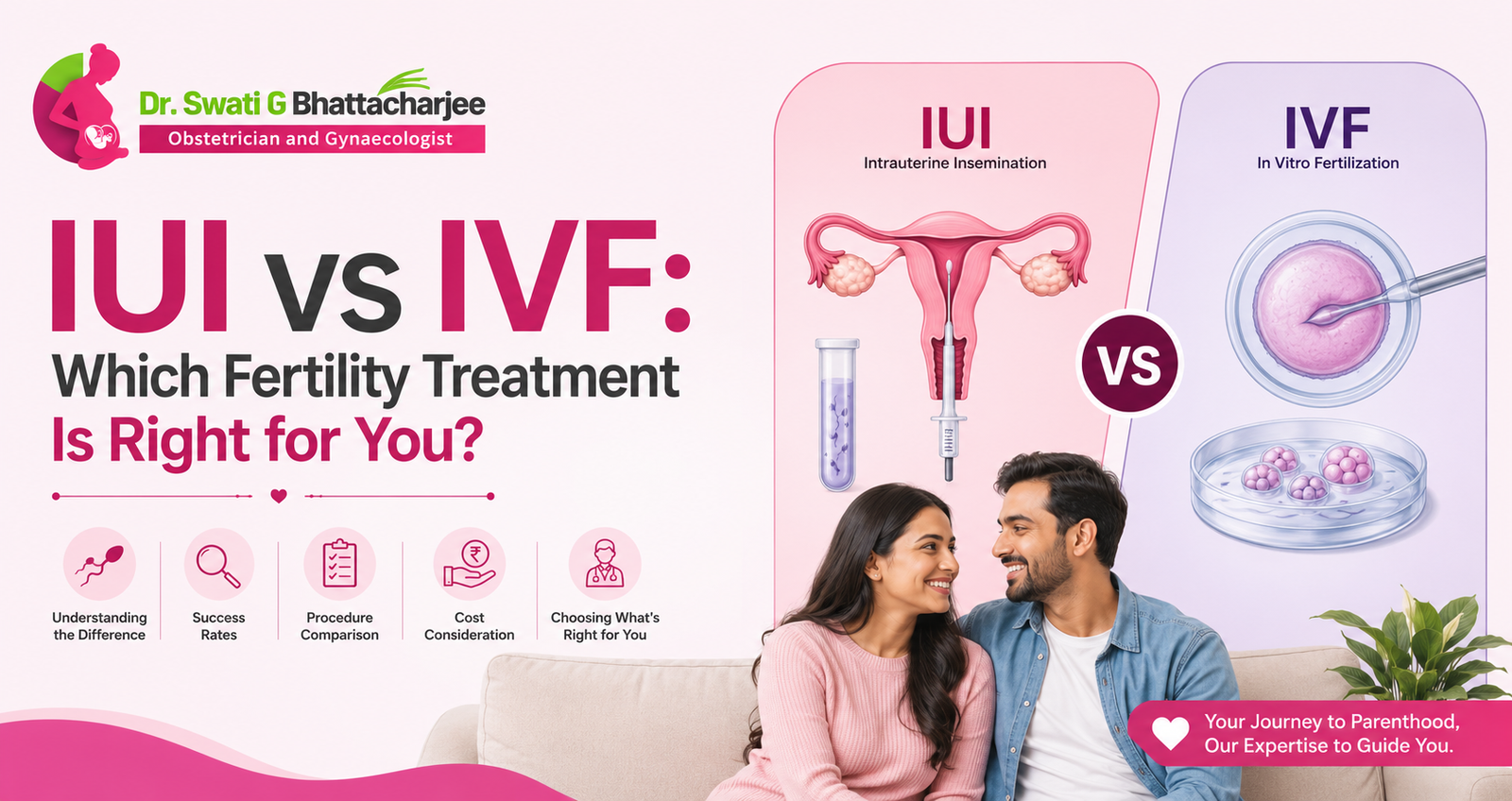
For couples struggling with infertility, choosing the right fertility treatment can be confusing. One of the most common questions asked by couples is “IUI vs IVF which is better?” Both Intrauterine Insemination (IUI) and In Vitro Fertilization (IVF) are advanced fertility treatments that help couples achieve pregnancy, but they work differently and are suitable for different fertility conditions.
The right choice depends on several factors, including age, fertility diagnosis, sperm quality, egg health, and previous treatment history. Understanding the difference between IUI and IVF can help you make a better decision with guidance from a fertility specialist.
What is IUI (Intrauterine Insemination)?
IUI is a simple and minimally invasive fertility treatment where specially prepared sperm is directly placed into the uterus during ovulation. This process helps increase the chances of fertilization by allowing more healthy sperm to reach the egg.
IUI is commonly recommended for:
- Unexplained infertility
- Mild male infertility
- Ovulation-related problems
- Cervical mucus issues
- Couples using donor sperm
The procedure is quick, requires minimal recovery time, and is usually considered the first fertility treatment option before moving to more advanced procedures.
What is IVF (In Vitro Fertilization)?
IVF is a more advanced assisted reproductive technology where fertilization happens outside the body in a laboratory. During IVF, eggs are collected from the ovaries and combined with sperm to create embryos. A healthy embryo is then transferred into the uterus.
IVF may be recommended for:
- Blocked fallopian tubes
- Severe male infertility
- Endometriosis
- Low ovarian reserve
- Failed IUI treatments
- Advanced maternal age
- Genetic testing requirements
Since IVF bypasses many natural barriers to conception, it often provides higher success rates compared to IUI.
IUI vs IVF Which Is Better?
The answer depends on your individual fertility situation. There is no single treatment that is best for every couple.
IUI may be a better option if:
- You are younger with good fertility health.
- Your fallopian tubes are open.
- Ovulation is normal.
- Male infertility is mild.
- You prefer a less invasive and affordable treatment.
IVF may be a better choice if:
- Fallopian tubes are blocked.
- Sperm quality is severely affected.
- You have been trying to conceive for a long time.
- Previous IUI cycles were unsuccessful.
- You are above 35 years of age.
- You need embryo screening.
A fertility specialist evaluates your medical history and recommends the treatment that gives you the best chance of pregnancy.
Difference Between IUI and IVF
| Factor | IUI | IVF |
|---|---|---|
| Fertilization | Happens naturally inside the body | Happens in a laboratory |
| Procedure | Simple insemination | Egg retrieval and embryo transfer |
| Cost | Lower | Higher |
| Treatment Complexity | Less complex | More advanced |
| Success Rate | Moderate | Higher |
| Best For | Mild fertility problems | Complex infertility cases |
Success Rate of IUI vs IVF
Success rates vary depending on age, fertility health, and the cause of infertility.
IUI Success Rate
IUI success rates are usually around 10–20% per cycle. The chances are higher when:
- The woman is younger.
- Eggs and sperm quality are good.
- Ovulation timing is properly monitored.
IVF Success Rate
IVF generally has a higher success rate because it controls several steps of the conception process. Success depends on factors such as maternal age, embryo quality, and overall reproductive health.
Although IVF is more expensive, it may provide better chances for couples with complicated fertility challenges.
What Are Early Signs of Successful IUI?
After an IUI procedure, many women look for signs that indicate pregnancy. Some possible early signs of successful IUI include:
- Mild implantation cramps
- Light spotting
- Breast tenderness
- Fatigue
- Increased urination
- Mild nausea
- Bloating
- Missed period
However, these symptoms can also occur due to fertility medications and hormonal changes. A pregnancy test after the recommended waiting period is the most accurate way to confirm success.
What to Avoid After IUI?
Following proper care after IUI can support your fertility journey. Here are some things to avoid:
Avoid Heavy Physical Activity
Avoid intense workouts and heavy lifting immediately after IUI. Light walking and normal activities are usually safe.
Avoid Smoking and Alcohol
Smoking and alcohol can negatively affect fertility and early pregnancy development.
Avoid Excessive Stress
Managing stress through relaxation techniques, proper sleep, and emotional support can help you stay positive during the waiting period.
Avoid Taking Medicines Without Consultation
Always consult your doctor before taking any medication after IUI.
Avoid Early Pregnancy Testing
Testing too soon may give inaccurate results. Follow your fertility specialist’s instructions regarding the right testing time.
Lifestyle Tips to Improve Fertility Treatment Success
Whether you choose IUI or IVF, maintaining a healthy lifestyle can support your fertility goals.
- Eat a nutritious and balanced diet.
- Maintain a healthy weight.
- Exercise moderately.
- Get enough sleep.
- Take prescribed fertility supplements.
- Avoid smoking and excessive alcohol.
- Manage stress effectively.
Your partner’s health also matters, as sperm quality plays an important role in successful conception.
FAQs:
Which one is better, IUI or IVF?
Both treatments have advantages. IUI is suitable for mild fertility problems, while IVF is usually recommended for complex infertility cases or when higher success chances are needed.
How many IUI cycles should I try before IVF?
Many doctors suggest trying multiple IUI cycles before IVF, but the decision depends on age, fertility diagnosis, and individual circumstances.
Does IUI hurt?
IUI is generally a painless procedure. Some women may experience mild cramping during or after treatment.
Is IVF the only option after failed IUI?
Not always. Your doctor may recommend additional IUI attempts or IVF depending on your fertility condition.
Can I get pregnant naturally after IUI?
Yes, some couples may conceive naturally after IUI, especially when the underlying fertility issue is mild.
Conclusion
When comparing IUI vs IVF which is better, there is no universal answer. The ideal fertility treatment depends on your age, fertility condition, medical history, and pregnancy goals. IUI is often a good starting option for couples with mild fertility issues, while IVF provides advanced treatment for more complex cases and generally offers higher success rates. Consulting an experienced fertility specialist can help you understand your options and choose the treatment approach that gives you the best chance of achieving your dream of parenthood.
Read More:
