
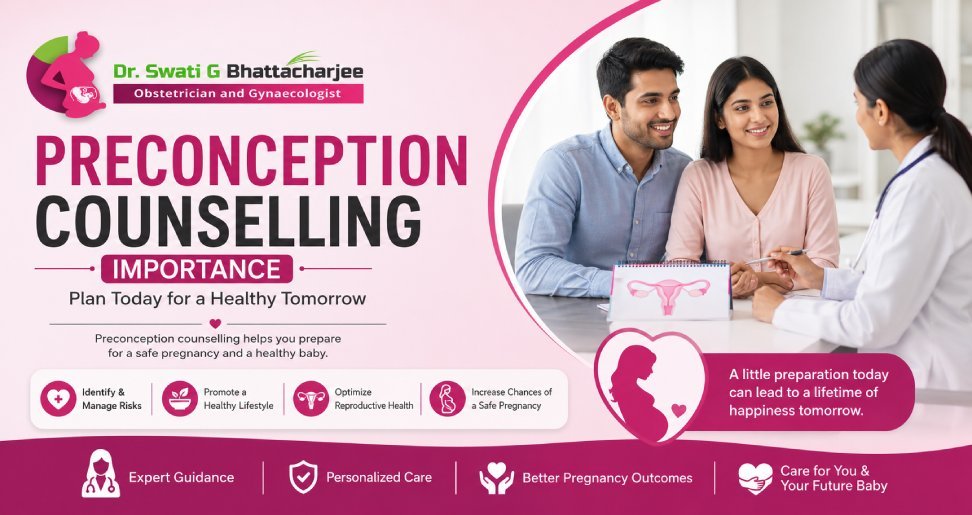
Planning a pregnancy is an important decision that involves more than simply stopping contraception and trying to conceive. Preconception counselling helps couples understand how their health, lifestyle, medications, nutrition, and existing medical conditions can influence pregnancy and the baby’s development. It provides an opportunity to identify possible risks early and take suitable steps before conception.
For couples planning pregnancy in Kolkata, consulting an experienced gynecologist such as Dr Swati G Bhattacharjee can help make the pre-pregnancy journey more informed and organized. Proper guidance before conception can support a healthier pregnancy and prepare both partners physically and emotionally for parenthood.
What Is Preconception Counselling?
Preconception counselling is a healthcare consultation that takes place before pregnancy. It focuses on identifying and managing factors that may affect conception, pregnancy, childbirth, or the health of the baby.
During the consultation, the doctor may discuss medical history, previous pregnancies, menstrual health, medications, vaccinations, nutrition, lifestyle habits, family history, and other relevant factors. The aim is not to create unnecessary worry but to identify preventable risks and encourage healthy preparation.
Why Is Preconception Counselling Important?
The importance of preconception counselling lies in its preventive approach. Some health conditions may be present without obvious symptoms but can affect pregnancy. Addressing them before conception can make pregnancy planning safer.
1. Identifies Existing Health Conditions
Conditions such as diabetes, thyroid disorders, high blood pressure, anemia, obesity, and certain infections may influence pregnancy. Preconception counselling provides an opportunity to identify such issues and discuss appropriate management before conception.
If a woman already has a medical condition, her doctor can assess whether it is well controlled and whether any additional monitoring may be needed during pregnancy.
2. Reviews Medications and Supplements
Not every medication is suitable during pregnancy. Some prescription medicines, over-the-counter products, and supplements may require review before conception.
During preconception counselling, the doctor can review current medications and determine whether changes are appropriate. However, medicines should never be stopped or changed without professional medical advice.
3. Helps With Folic Acid and Nutrition
Nutrition plays an important role in preparing the body for pregnancy. Folic acid is particularly important before conception because adequate folate intake helps reduce the risk of certain neural tube defects.
A doctor can recommend an appropriate prenatal supplement and discuss a balanced diet based on individual needs. Maintaining adequate levels of important nutrients can help support overall reproductive health.
4. Supports a Healthy Lifestyle
Lifestyle habits can influence fertility and pregnancy outcomes. Preconception counselling provides an opportunity to discuss maintaining a healthy weight, eating nutritious foods, exercising appropriately, getting sufficient sleep, and avoiding tobacco, alcohol, and other harmful substances.
Making these changes before pregnancy can be easier than trying to make major lifestyle adjustments after conception.
5. Assesses Reproductive and Menstrual Health
A woman’s menstrual cycle can provide useful information about reproductive health. Irregular periods, very painful periods, or other menstrual concerns may sometimes indicate an underlying issue that deserves evaluation.
Preconception counselling allows couples to discuss fertility concerns and understand when further evaluation may be appropriate.
6. Reviews Vaccination and Infection Risks
Certain infections can cause complications during pregnancy. Depending on medical history and vaccination status, a doctor may recommend checking whether particular vaccinations or preventive measures are needed before conception.
This is another reason why consulting a healthcare professional before trying to conceive can be beneficial.
7. Considers Family and Genetic History
Family medical history can sometimes identify conditions that may have implications for pregnancy or the baby. A doctor may ask about inherited disorders, birth defects, repeated pregnancy loss, or certain genetic conditions in the family.
When appropriate, couples may be advised to consider genetic counselling or specific testing.
What Happens During a Preconception Consultation?
A preconception appointment is generally personalized according to the couple’s medical history and individual needs. Depending on the situation, the consultation may include:
- Review of medical and surgical history
- Menstrual and reproductive history
- Previous pregnancy and delivery history
- Medication and supplement review
- Lifestyle and dietary discussion
- Assessment of existing medical conditions
- Discussion about vaccinations
- Guidance about folic acid and nutrition
- Family and genetic history assessment
- Recommended laboratory tests when clinically appropriate
- Advice about fertility and pregnancy planning
Not every person requires every test. A healthcare professional determines investigations according to individual circumstances.
Who Should Consider Preconception Counselling?
Preconception counselling can be useful for any couple planning a pregnancy, not only those with medical problems.
It can be particularly valuable for women who:
- Have diabetes, thyroid problems, hypertension, or other chronic conditions
- Have experienced previous pregnancy complications
- Have had recurrent pregnancy loss
- Have irregular menstrual cycles
- Take regular prescription medications
- Have a family history of inherited disorders
- Are planning pregnancy at an advanced maternal age
- Have concerns about fertility
- Want guidance on nutrition and lifestyle before pregnancy
Men can also contribute to healthy pregnancy planning. Factors such as smoking, alcohol consumption, certain medications, lifestyle habits, and overall health can affect male reproductive health.
When Should You Have Preconception Counselling?
Ideally, couples should consider a preconception consultation before they begin trying to conceive. This gives enough time to address health concerns, review medications, improve lifestyle habits, and complete any recommended evaluations.
There is no need to wait until pregnancy occurs to begin preparing. Early guidance allows couples to make informed decisions and take preventive steps when appropriate.
Preconception Counselling With Dr Swati G Bhattacharjee
Choosing the right gynecologist can make pregnancy planning more comfortable and informed. Dr Swati G Bhattacharjee provides gynecological care and guidance for women who are planning pregnancy and want professional support before conception.
A consultation with Dr Swati G Bhattacharjee can help women understand their individual health requirements, discuss existing concerns, and receive appropriate guidance for preparing for pregnancy. Instead of relying on generalized advice from the internet or social media, personalized medical guidance can help address factors specific to each woman’s health.
If you are planning to start a family, discussing your health and pregnancy goals with Dr Swati G Bhattacharjee can be an important first step toward responsible pregnancy planning.
Frequently Asked Questions ( FAQs ) :-
Ans :- It is not mandatory for every couple, but it can be beneficial for anyone planning pregnancy. It provides an opportunity to identify health concerns and receive personalized advice before conception.
Ans :- Ideally, schedule the consultation before actively trying to conceive. This allows time to address any health, medication, vaccination, nutrition, or lifestyle-related concerns.
Ans :- Preconception counselling is not a guaranteed fertility treatment. However, it can identify certain health or lifestyle factors that may affect reproductive health and help determine whether further fertility evaluation is appropriate.
Ans :- Yes. Pregnancy planning involves both partners. A man’s general health and lifestyle can also influence reproductive health, so discussing relevant concerns with a healthcare professional may be helpful.
Conclusion
The importance of preconception counselling goes beyond preparing for pregnancy. It is an opportunity to understand your health, identify potential risks, improve lifestyle habits, review medications, and receive appropriate nutritional and medical guidance before conception.
A healthy pregnancy begins with thoughtful preparation. If you and your partner are planning to start a family, consider speaking with an experienced gynecologist such as Dr Swati G Bhattacharjee for personalized preconception guidance. Taking the right steps before pregnancy can help you approach this important stage of life with greater awareness and confidence.
