
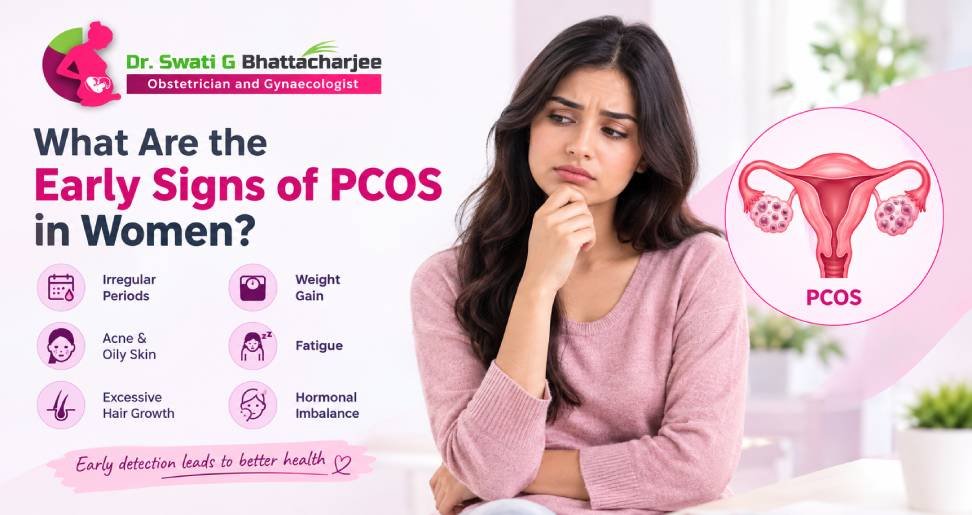
Polycystic Ovary Syndrome (PCOS) is a common hormonal and metabolic condition that can affect women during their reproductive years. It may influence menstrual cycles, ovulation, skin, hair growth, body weight, and fertility. However, PCOS does not look the same in every woman. Some women may experience several noticeable symptoms, while others may have only subtle changes.
Recognizing the early signs of PCOS can encourage timely medical evaluation and appropriate management. PCOS is also a complex condition with multiple contributing factors, including genetic, hormonal, and metabolic influences.
What Are the First Signs of PCOS?
The first signs of PCOS can vary from woman to woman. Some of the most common early symptoms include:
1. Irregular Periods
Changes in the menstrual cycle are often among the first noticeable signs. Periods may occur less frequently, become unpredictable, or sometimes be absent for several months. Irregular ovulation can contribute to these changes.
However, an irregular period does not automatically mean that a woman has PCOS. Other hormonal, lifestyle, and medical conditions can also affect menstruation.
2. Excess Facial or Body Hair
Increased growth of coarse hair on areas such as the chin, upper lip, chest, abdomen, or back can occur because of higher levels or activity of androgen hormones.
This condition, known as hirsutism, is one of the commonly recognized features associated with PCOS.
3. Persistent Acne and Oily Skin
Hormonal changes associated with PCOS can contribute to excess oil production. Some women may develop persistent acne, particularly around the jawline, chin, face, chest, or back.
Adult acne that continues despite conventional skincare may be worth discussing with a healthcare professional, especially when accompanied by irregular periods or other symptoms.
4. Unexplained Weight Changes
Some women with PCOS experience weight gain or find it difficult to manage their weight. Metabolic changes, including insulin resistance, can occur in PCOS, although not every woman with PCOS has overweight or obesity.
5. Hair Thinning
PCOS-related hormonal changes may sometimes contribute to thinning hair on the scalp. Increased hair shedding or a widening parting may occur alongside increased facial or body hair.
6. Difficulty Getting Pregnant
PCOS can interfere with regular ovulation. As a result, some women may experience difficulty conceiving. However, having PCOS does not mean that pregnancy is impossible. Fertility treatment and appropriate management can help many women achieve pregnancy.
What Causes PCOS in Women?
There is no single cause of PCOS. Researchers believe that a combination of genetic, hormonal, and metabolic factors contributes to its development.
Hormonal Imbalance
Women with PCOS may have increased androgen activity. Androgens are hormones that are present naturally in women but may be present at higher levels or have greater effects in some women with PCOS.
This can contribute to symptoms such as excess facial hair, acne, and irregular ovulation.
Insulin Resistance
Insulin helps the body use glucose for energy. In some women with PCOS, the body does not respond effectively to insulin, a condition known as insulin resistance.
The resulting changes in insulin levels can affect ovarian hormone production and contribute to metabolic and reproductive symptoms. Insulin resistance is commonly associated with PCOS, although it is not required for diagnosing the condition.
Genetic Factors
PCOS can sometimes appear in families. Having close relatives with PCOS or related metabolic conditions may increase a woman’s likelihood of developing it.
Lifestyle and Environmental Factors
Lifestyle factors may influence metabolic health and the severity of certain PCOS symptoms. However, PCOS should not be viewed simply as a consequence of lifestyle or body weight. Its causes are multifactorial and remain an active area of research.
PCOS Symptoms and Treatment
PCOS symptoms and treatment depend on the individual’s symptoms, reproductive goals, hormonal profile, and overall health.
Treatment does not follow one fixed approach for every woman. Doctors may recommend lifestyle modifications, medicines, or fertility-focused treatment depending on the patient’s needs.
Common management approaches may include:
- Maintaining regular physical activity
- Following a balanced, nutrient-rich diet
- Managing body weight where appropriate
- Medicines to regulate menstrual cycles
- Treatment for acne or excess hair growth
- Medicines that address specific metabolic concerns
- Fertility medicines when pregnancy is desired
Regular monitoring may also be recommended because PCOS can be associated with metabolic concerns such as glucose intolerance and increased cardiovascular risk.
How Is PCOS Diagnosed?
There is no single test that confirms PCOS in every woman. A doctor generally considers the patient’s medical history, symptoms, physical examination, and appropriate investigations.
Depending on the individual case, evaluation may include:
Medical and Menstrual History
Your doctor may ask about the frequency and pattern of your periods, changes in weight, acne, excess hair growth, fertility concerns, and other symptoms.
Hormonal Blood Tests
Blood tests may be recommended to assess hormone levels and help identify other conditions that can cause similar symptoms.
Blood Sugar and Metabolic Tests
Because insulin resistance and metabolic abnormalities can occur with PCOS, a healthcare professional may recommend appropriate glucose or metabolic testing.
Ultrasound
An ultrasound may be used to examine the ovaries and uterus. Importantly, the appearance of polycystic ovaries alone does not necessarily mean that a woman has PCOS. PCOS diagnosis depends on the overall clinical picture and appropriate diagnostic criteria.
How to Cure PCOS Permanently?
Many women ask, “How to cure PCOS permanently?” It is important to understand that PCOS is generally considered a long-term condition rather than an infection or temporary illness that can simply be cured with one medicine.
The goal of treatment is usually to manage symptoms, support hormonal and metabolic health, regulate ovulation and periods, and address fertility goals when needed.
Some symptoms may improve significantly with appropriate treatment and lifestyle changes. The right approach depends on the individual and may change over time.
Therefore, women should be cautious about products or treatments that promise a permanent cure for PCOS without medical evaluation.
When Should You See a Doctor?
Consider consulting a gynecologist if you experience:
- Frequently irregular or missed periods
- Sudden or excessive facial/body hair growth
- Persistent hormonal acne
- Unexplained scalp hair thinning
- Difficulty becoming pregnant
- Significant or unexplained weight changes
- Multiple symptoms occurring together
Early evaluation can help identify the cause of these symptoms and determine whether PCOS or another health condition may be responsible.
Final Thoughts
Recognizing the early signs of PCOS can help women seek appropriate medical advice rather than ignoring persistent hormonal or menstrual changes. Irregular periods, excess hair growth, acne, hair thinning, weight changes, and fertility difficulties can all occur with PCOS, but these symptoms can also have other causes.
Because PCOS is different for every woman, diagnosis and treatment should be individualized. A gynecologist can evaluate symptoms, perform appropriate tests, rule out other conditions, and develop a management plan based on the woman’s reproductive and overall health goals.
