
Two years but nobody asked why. She’d been taking ibuprofen on the bad days for two years when she walked into our clinic.
The pain was sometimes worse around her period. Sometimes just a constant low-grade presence she’d stopped noticing. She’d mentioned it once and been told it was probably period cramps. So she stopped mentioning it.
We ran the investigation. Endometriosis. Stage three. Two years of it progressing while she lived around it.
We see this story repeatedly. Not the same condition every time, but the same pattern. Pain attributed to periods or stress. Pain with an actual cause behind it. And a year or two passes before anyone looks.
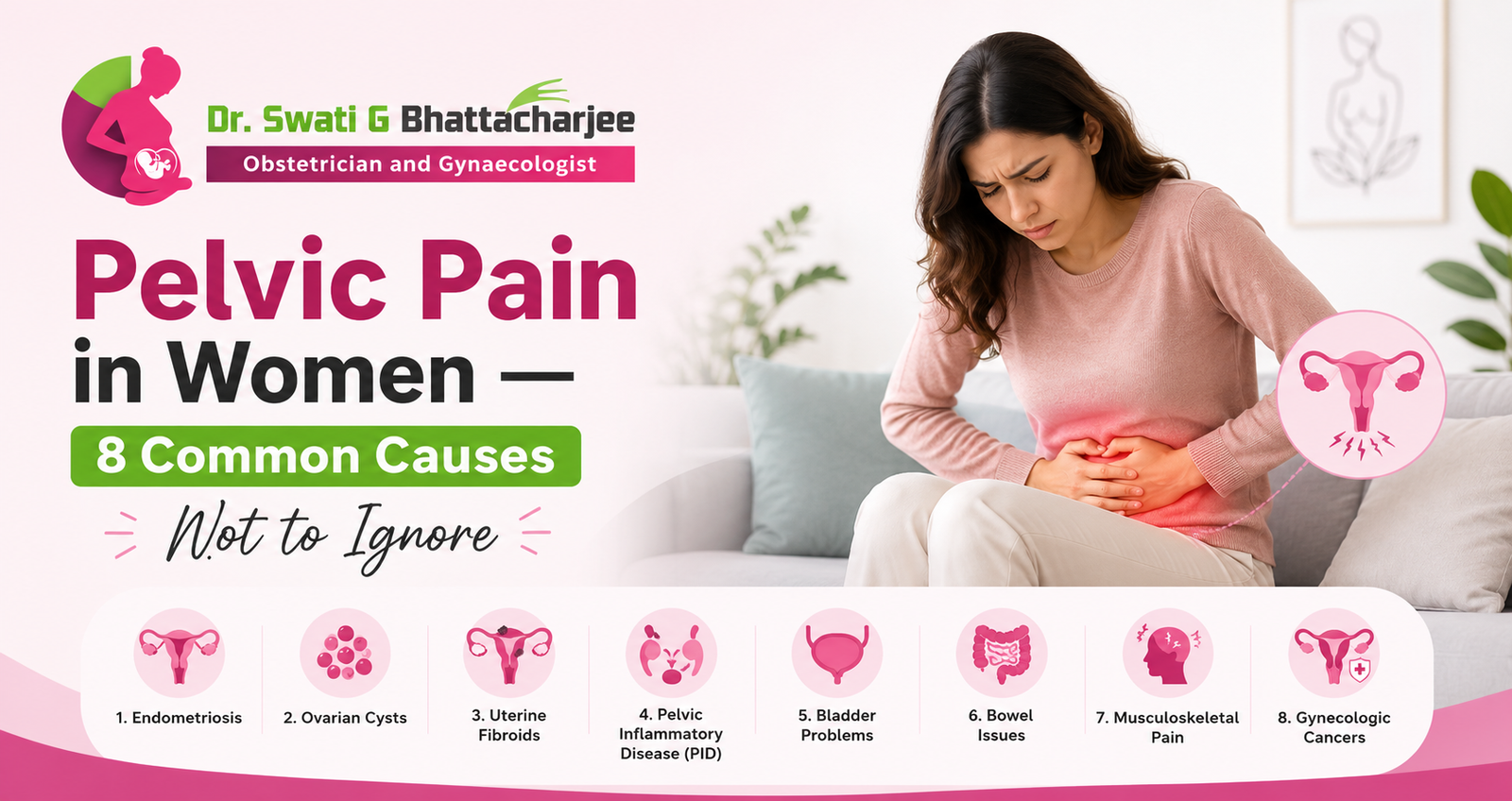
The Eight Things We’re Looking For
Endometriosis
Endometriosis is one of the most common causes of chronic pelvic pain. It occurs when tissue like the lining of the uterus grows outside the uterus. This tissue can bleed each month, causing inflammation, scarring, and pain.
Many women live with symptoms for years before receiving a diagnosis. In fact, studies suggest it can take 7 to 10 years to identify. Symptoms are often mistaken for normal period pain, which can delay treatment.
Ovarian Cysts
Ovarian cysts are fluid-filled sacs that develop on or inside the ovaries. Most cysts disappear on their own and cause no symptoms.
However, some cysts can cause:
- Pelvic pressure or discomfort
- A dull ache in the lower abdomen
- Sudden, severe pain if the cyst ruptures
An ultrasound can help detect cysts, even when symptoms are mild.
Pelvic Inflammatory Disease (PID)
Pelvic inflammatory disease is an infection of the female reproductive organs, usually caused by bacteria traveling upward from the cervix.
Symptoms may include:
- Pelvic pain
- Fever
- Unusual vaginal discharge
Some women have very mild symptoms or none at all. If left untreated, PID can cause scarring that may affect fertility. Early diagnosis and antibiotic treatment are important.
Fibroids
Fibroids are non-cancerous growths that develop in or around the uterus. They are very common and often cause no symptoms.
When symptoms occur, they may include:
- Heavy menstrual bleeding
- Painful periods
- Pelvic pressure
- Frequent urination
Treatment depends on the size, location, and symptoms caused by the fibroids.
Adenomyosis
Adenomyosis occurs when tissue that normally lines the uterus grows into the muscular wall of the uterus. This can cause the uterus to enlarge and lead to increasingly painful periods.
Common symptoms include:
- Severe menstrual cramps
- Heavy bleeding
- Pelvic pain
Many women notice that their periods become significantly more painful over time, particularly in their late 30s and 40s.
Not Everything in the Pelvis Comes from the Reproductive System
This is the part we watch for specifically because it gets missed most often.
Lower back and pelvic pain together, particularly when it changes with posture or movement, often has a musculoskeletal explanation. Pelvic floor dysfunction. Sacroiliac joint issues. Problems in the lower back referring pain forward. These don’t show up on gynaecological ultrasound because they’re not gynaecological. Treating them as gynaecological wastes time and doesn’t resolve the pain. Identifying them correctly means sending the patient to physiotherapy instead, where they often improve rapidly.
Interstitial cystitis is a chronic bladder condition that produces pelvic pressure and pain that worsens as the bladder fills. It gets misdiagnosed as recurrent urinary tract infections so often that women come in having had multiple antibiotic courses that never fully resolved things. The antibiotics helped the inflammation slightly. They weren’t treating the actual problem.
And IBS. Bowel cramping in the lower abdomen and pelvis, often worse around menstruation. Women with endometriosis frequently have IBS alongside it. Managing only one when both are present explains why improvement is partial.
Pelvic Pain Treatment in Female Patients
At our clinic we take the full history before ordering anything.
When does it happen. What makes it worse or better. Does it track with the cycle. What other symptoms come with it. How long has it been there. That pattern shapes everything we investigate.
Pelvic ultrasound, hormonal blood tests, and clinical examination together identify most causes. Endometriosis sometimes needs laparoscopy for definitive diagnosis and treatment in the same procedure. Bladder causes need urological investigation. Musculoskeletal causes need physiotherapy assessment. The investigation follows the clinical picture.
Treatment that doesn’t match the diagnosis doesn’t help. We’ve seen patients manage pain for years on the wrong treatment for the wrong condition. Obvious in retrospect. Not obvious at the time.
FAQs:
What causes pelvic pain in women?
Eight conditions cover most cases. Endometriosis, ovarian cysts, pelvic inflammatory disease, fibroids, adenomyosis, musculoskeletal problems, bladder conditions, and IBS. Each needs a specific investigation and a different treatment approach.
What causes lower back and pelvic pain in females together?
Often musculoskeletal, especially pelvic floor dysfunction or sacroiliac joint problems. Sometimes endometriosis or fibroids referring pain into the back. The pattern of when and how it occurs tells us which to investigate first.
What is pelvic pain treatment for females?
It follows the cause. Hormonal therapy or surgery for endometriosis. Antibiotics for PID. Physiotherapy for musculoskeletal causes. Bladder retraining for interstitial cystitis. There is no single answer because there is no single cause.
The Woman Who Stopped Mentioning It
She came back six months after starting treatment. The pain she’d carried for two years was gone.
She didn’t know how much she’d been compensating until she wasn’t. The way she’d stopped certain activities without registering why. The exhaustion of managing pain every day without naming it as pain.
At our clinic, Dr. Swati G Bhattacharjee provides full gynaecological assessment for women with pelvic pain, including clinical history, pelvic ultrasound, hormonal evaluation, and a clear diagnosis before any treatment is planned. If pelvic pain has been present without a proper investigation, that conversation is worth having.
Read More:
