
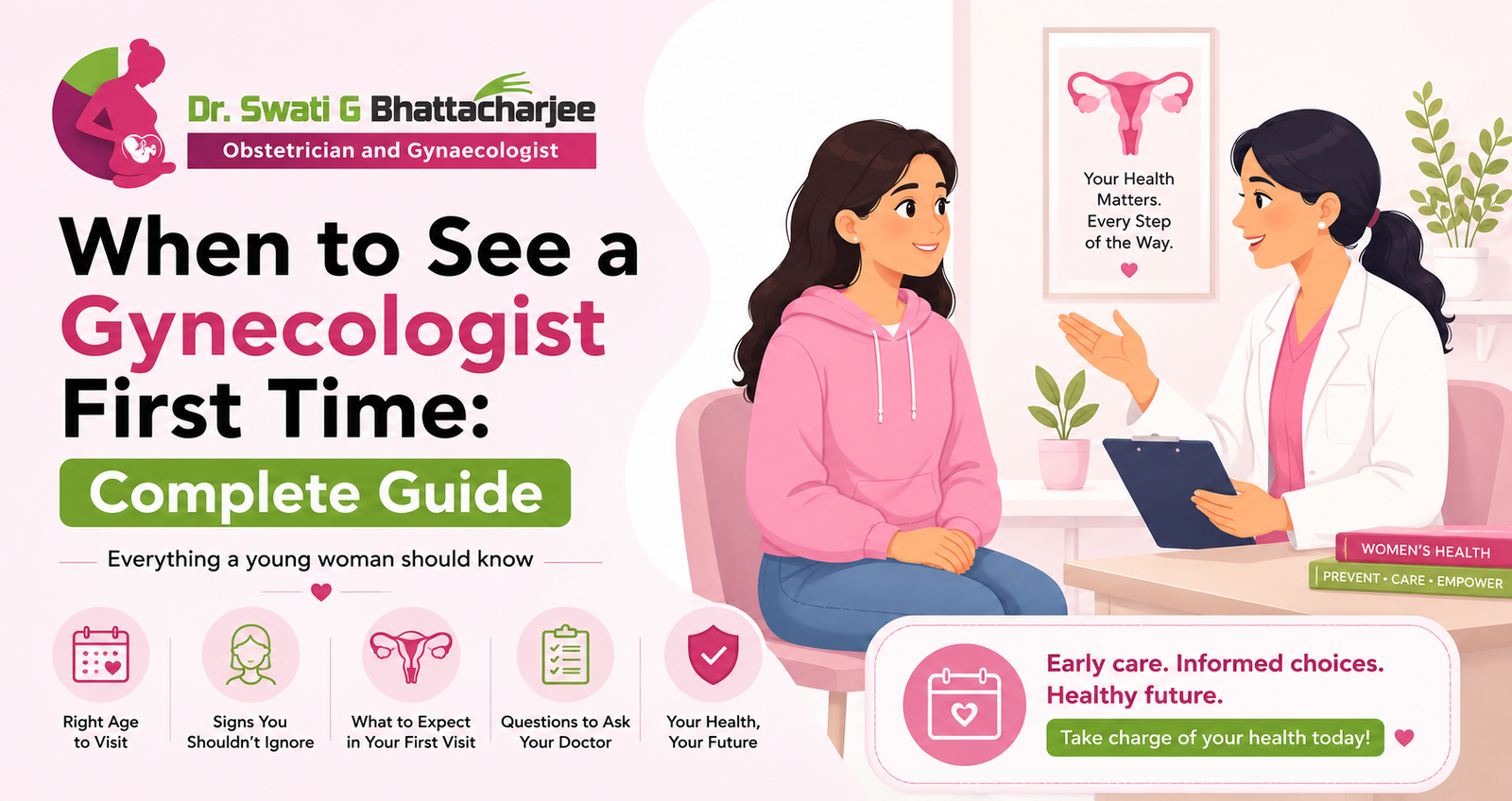
A woman comes to us in her late twenties trying to conceive. We find PCOS she’s had since she was seventeen. Regular check-ins from seventeen onwards would have meant we were managing it before it became a fertility question. Instead we’re managing it now, under time pressure, with more anxiety than necessary.
We see this more than we should. And every time, the reason the first visit never happened is the same. She assumed there was nothing to go in for unless something was wrong.
We want to change that assumption. Here’s why.
When to See a Gynecologist for the First Time
Between 13 and 15 is our recommendation, and it aligns with most gynaecological guidelines.
Not because anything is expected to be wrong at that age. Because that’s when questions about the body are most active and most often unanswered. Puberty, periods starting, what normal looks and feels like. These are questions most teenagers don’t ask a doctor because they don’t realise they can. The first visit at this age is typically a conversation. We don’t perform examinations unless there’s a specific reason. We answer questions. We establish that this is a safe space to come back to.
If that first visit didn’t happen in the teenage years, the next clear moment is when periods establish themselves as a regular pattern and especially if anything about them feels off.
Reasons to See a Gynecologist Before Things Feel Urgent
We tell patients this directly: we’d rather see them when nothing is wrong than when something is.
Painful periods: It require strong painkillers every month are not something to manage silently. We’ve seen patients who treated period pain as a fact of life for ten years before coming in. We found endometriosis. Ten years of unmanaged endometriosis that had progressed significantly while the patient managed it with ibuprofen and adjusted her life around it.
Irregular periods: We see patients who’ve had unpredictable cycles for years and assumed they were just “like that.” In a number of these cases we find PCOS or thyroid problems that had been running quietly in the background, affecting energy, weight, mood, and fertility, without anyone investigating.
Unusual discharge: persistent itching, or discomfort that won’t settle. These send patients to Google, which produces alarming results, which produces avoidance. Most of the time what we find is a simple infection that clears in days. Coming in sooner means it clears sooner.
Contraception: his is a reason to visit us that has nothing to do with a symptom. Understanding the options, knowing what suits a specific patient’s health history, is worth a consultation of its own. We have this conversation with young patients regularly and it’s one of the most practically useful things we do.
When to See a Gynecologist When Trying to Conceive
Before you start trying. Not after six months. Before.
We offer preconception consultations specifically because the assessment we do there is identical to the early fertility workup we’d do after six months of unsuccessful trying. Thyroid function, hormone levels, cycle analysis, pelvic ultrasound, partner semen analysis. If we find something correctable at the preconception stage, it gets corrected before it becomes a problem. If we find nothing, the couple starts trying with confidence.
Patients who come to us after twelve months of unexplained difficulty sometimes have conditions that have been present and identifiable the whole time. We’re finding them later than we could have. That’s frustrating for everyone.
If a couple has been trying for twelve months without success, or six months if the woman is over 35, we need to see them. Not “wait and see.” See us.
What Our First Appointment Together Covers
We take a full history first. Cycle length and regularity, pain level, any symptoms the patient has noticed, family history of conditions like PCOS, endometriosis, or thyroid problems.
For patients ready for a physical examination, we do a pelvic assessment. For patients over 25, we include cervical screening. Blood tests for thyroid, hormones, and nutritional markers where the history suggests they’re needed.
We don’t rush the first visit. The information we gather shapes everything that comes after it. A patient who tells us her mother and sister both have endometriosis gets investigated differently from a patient with no family history as these details matter.
FAQs:
When should you see a gynaecologist for the first time?
Ideally between 13 and 15. If that passed, at the first sign of cycle concern, or simply when questions about reproductive health need answered by someone who knows.
What are reasons to see a gynaecologist?
Painful or irregular periods, unusual symptoms, contraception guidance, preconception planning, cervical screening, or establishing a baseline. Any of these is a valid reason. None of them requires waiting until something is urgent.
When to see a gynaecologist when trying to conceive?
Before starting. A preconception consultation does the same work as an early fertility investigation and does it earlier. If trying has already started and six to twelve months have passed without success, come in now.
The Patients We Think About
The ones who came in for a fertility workup and described period pain they’d normalised for twelve years. The irregular cycles accepted as personality rather than a pattern worth investigating. The PCOS diagnosed at thirty-four that was present at twenty-two.
None of them waited because they were careless. They waited because nobody had told them to come in sooner.
We’re telling you now.
Dr. Swati G Bhattacharjee sees patients from their first gynaecological visit through preconception planning and pregnancy care. If that first visit hasn’t happened yet or questions have been sitting unanswered, we’re the right place to start.
Read More:
