
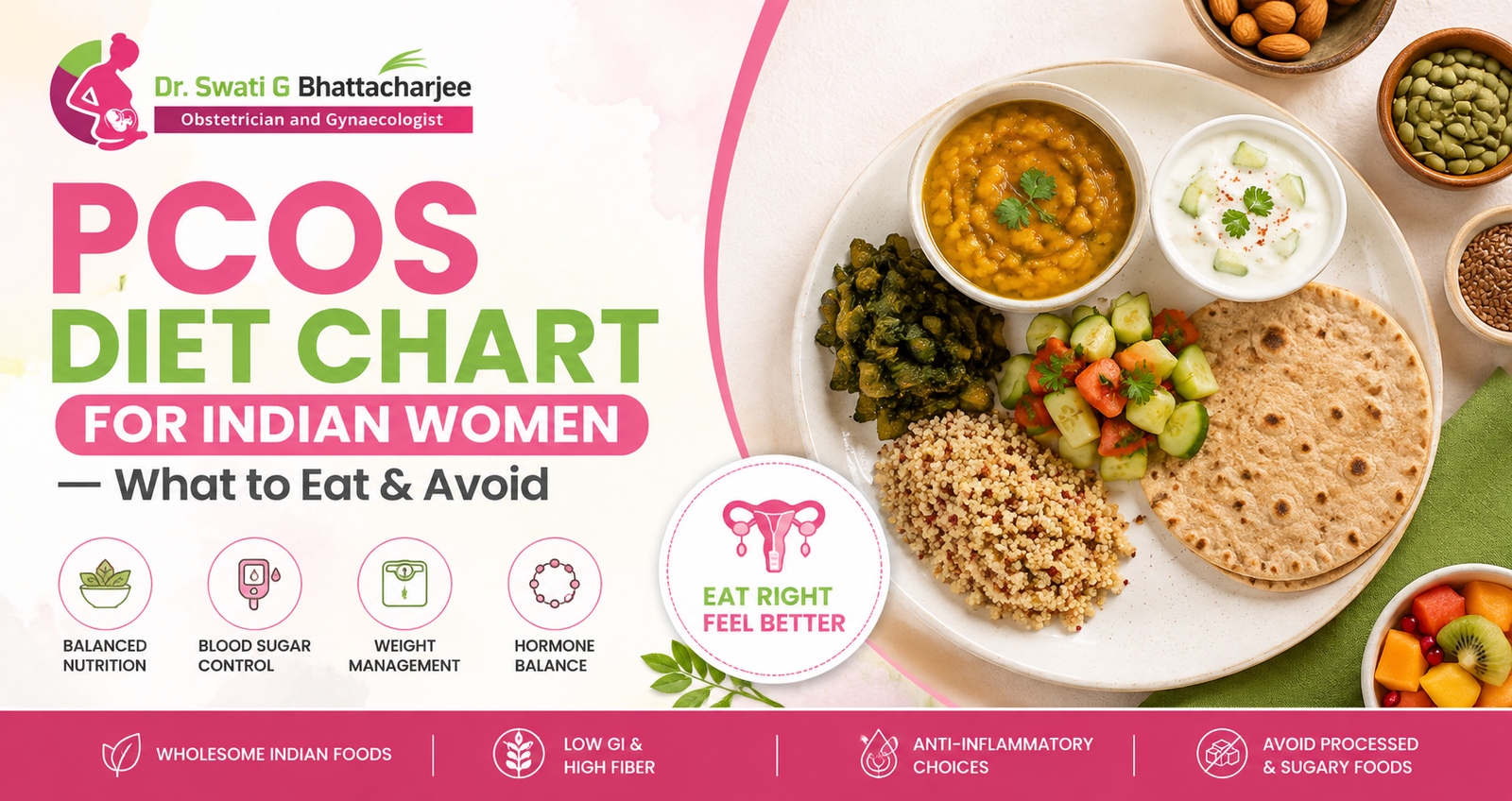
Polycystic Ovary Syndrome (PCOS) is a common hormonal condition that can affect periods, ovulation, skin, hair growth, metabolism and fertility. If you are searching for a PCOS diet plan Indian women can actually follow, the answer is not an extreme diet or a list of “forbidden” foods. A sustainable eating pattern built around nutritious Indian foods can support overall health and complement medical treatment.
Current international PCOS guidance does not recommend one specific diet as the best choice for every woman. Instead, healthy eating should be personalised according to nutritional needs, cultural preferences, lifestyle, goals and medical requirements. It can also help women make informed choices without giving up familiar home-cooked meals or following unrealistic social-media food rules that promise instant results.
What Should a PCOS Diet Include?
A practical PCOS diet should focus on balanced meals containing protein, fibre-rich carbohydrates, vegetables, fruits and healthy fats. Choosing minimally processed foods more often can make meals filling and nutritionally balanced.
The goal is not to stop eating carbohydrates but to improve carbohydrate quality, portions and meal balance.
A Simple PCOS Diet Chart for Indian Women
Early morning: Start with water, followed by a small portion of almonds, walnuts, chia seeds or flaxseeds if suitable for you.
Breakfast: Choose vegetable oats, moong dal chilla, besan chilla, vegetable poha, millet upma or eggs with whole-wheat toast. Add curd or another protein source when appropriate.
Mid-morning: Have one whole fruit such as guava, apple, orange, pear, papaya or pomegranate. Whole fruit is generally preferable to fruit juice.
Lunch: Build a balanced plate with vegetables, dal or another protein source, salad and a moderate portion of whole-grain roti, brown rice or millet. Non-vegetarian options can include fish or skinless chicken.
Evening snack: Try roasted chana, makhana, sprouts chaat, peanuts, unsweetened curd or a simple beverage without excessive added sugar.
Dinner: Keep it balanced and comfortable rather than extremely restrictive. Options include dal with vegetables and roti, paneer with sautéed vegetables, egg curry with roti, grilled fish with vegetables or a vegetable-and-protein-based khichdi.
Best Foods to Eat for PCOS
1. Fibre-Rich Vegetables
Include spinach, beans, broccoli, cauliflower, cabbage, bottle gourd, bitter gourd, carrots, cucumber, tomatoes and other seasonal vegetables. Vegetables add fibre and micronutrients while helping create satisfying meals.
2. Protein-Rich Foods
Protein can help make meals more filling and supports normal body functions. Indian choices include dal, lentils, chickpeas, rajma, soy, tofu, paneer, eggs, fish, chicken and plain curd.
3. Whole Grains and Pulses
Choose whole-wheat roti, oats, brown rice, barley and millets such as ragi, jowar and bajra. Pulses and legumes are useful sources of fibre and plant protein.
4. Healthy Fats
Include sensible portions of nuts and seeds such as almonds, walnuts, flaxseeds, chia seeds, pumpkin seeds and peanuts. These can add texture, flavour and unsaturated fats to meals.
5. Whole Fruits
Women with PCOS do not generally need to eliminate fruit. Choose whole fruits and vary your choices according to season. If you have diabetes or another metabolic condition, your individual portions may need professional guidance.
Foods to Limit With PCOS
There is no universal “PCOS food ban,” but frequent consumption of highly processed foods can make healthy eating harder. Try to limit sugary drinks, packaged juices, sweets, cakes, pastries, deep-fried snacks, chips, refined fast foods and heavily processed convenience foods.
A sustainable diet is more realistic than an unnecessarily restrictive plan. Current guidelines emphasise flexible, individualised eating rather than nutritionally unbalanced restrictions.
Is Rice Good or Bad for PCOS?
Rice does not automatically need to be removed from a PCOS diet. Pair a moderate serving with dal, vegetables, salad, curd, fish, eggs or another protein source. Brown or less-refined rice can be included if you prefer it.
The overall meal pattern matters more than labelling individual foods as completely “good” or “bad.”
Can You Eat Roti, Potato and Fruit With PCOS?
Yes. Roti, potatoes and fruits can fit into a balanced diet. The bigger picture matters more than eliminating individual foods. Choose sensible portions, include protein and vegetables, and prioritise minimally processed foods. If you have specific blood-sugar concerns, your healthcare professional can tailor portions to your needs.
Lifestyle Habits That Support PCOS Management
Food is only one part of PCOS care. Regular physical activity, adequate sleep, stress management and medical follow-up are also important. For women who want weight management, goals should be individualised rather than based on unrealistic targets.
International guidance recommends healthy lifestyle behaviours for women with PCOS and recognises that lifestyle improvements can provide benefits even without weight loss.
Common Mistakes to Avoid
Avoid skipping meals to lose weight quickly, social-media detoxes, completely eliminating carbohydrates, or copying another woman’s diet. Focus on consistency, meal planning, hydration and realistic changes.
Remember that PCOS management is not about finding a miracle food. It is about developing sustainable habits that fit your health requirements and everyday lifestyle.
FAQs:
1. What is the best PCOS diet plan for Indian women?
There is no single best diet for everyone. A balanced pattern containing vegetables, protein, whole grains, pulses, fruits and healthy fats, personalised to individual needs, is a practical choice.
2. Which foods should I avoid in PCOS?
Limit frequent intake of sugary beverages, highly processed foods, deep-fried snacks and refined sweets. You generally do not need to completely eliminate an individual food unless medically advised.
3. Can I eat rice if I have PCOS?
Yes. Moderate portions of rice can be included with vegetables, protein and other nutritious foods.
4. Are fruits allowed in PCOS?
Yes. Whole fruits can be part of a balanced diet. Individual portions may need adjustment for specific medical conditions.
5. Can diet cure PCOS?
Diet does not “cure” PCOS. Healthy eating is an important part of long-term management and should complement appropriate medical care.
6. Do I need to lose weight to manage PCOS?
Not necessarily. Healthy lifestyle habits benefit women with PCOS across body sizes. If weight management is appropriate for you, it should be personalised and medically supported.
Take the Next Step With Dr. Swati G BhattaCharjee
Managing PCOS is about more than following a generic food chart. Your symptoms, menstrual pattern, lifestyle, nutritional needs and health goals are individual. If you are struggling with irregular periods, acne, unwanted hair growth, weight concerns or fertility-related questions, personalised evaluation can help you understand the right approach.
Consult Dr. Swati G BhattaCharjee for individualised guidance and comprehensive PCOS and women’s health care. With appropriate medical advice and sustainable lifestyle habits, you can take practical steps towards better long-term health and wellbeing.
Read More:
