
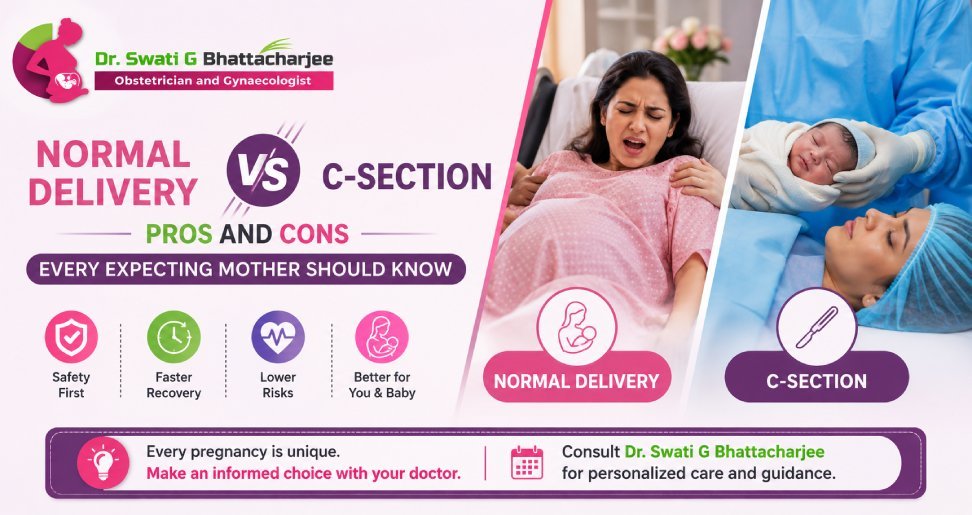
Choosing between a normal delivery and a Caesarean section (C-section) is one of the most important concerns for many expecting mothers. While vaginal delivery is often considered the natural way to give birth, a C-section can be a safe and necessary option when medical circumstances make vaginal birth risky.
The decision is not simply about which method is “better.” Every pregnancy is different, and the safest delivery method depends on the mother’s health, the baby’s condition, pregnancy complications, previous delivery history, and the advice of the treating obstetrician.
For personalized pregnancy care and guidance, women can consult Swati G Bhattacharjee, who provides obstetric and gynecological care focused on the individual needs of mothers and babies.
What Is Normal Delivery?
Normal delivery, also known as vaginal delivery, occurs when the baby is delivered through the birth canal. Labour usually begins naturally, although medical methods may sometimes be used to induce labour.
During vaginal delivery, the uterus contracts to help the cervix open and allow the baby to move through the birth canal. After delivery, the placenta is also delivered.
For many women with an uncomplicated pregnancy, vaginal birth is a safe and effective method of childbirth. However, it is not always possible or advisable.
What Is a C-Section?
A Caesarean section is a surgical procedure in which the baby is delivered through an incision made in the mother’s abdomen and uterus.
A C-section may be planned in advance or performed as an emergency if complications develop during pregnancy or labour. Doctors may recommend it when vaginal delivery could pose a significant risk to the mother or baby.
Some common reasons for a C-section include abnormal baby position, placenta-related complications, certain maternal health conditions, fetal distress, labour complications, or a history of particular uterine surgeries.
Pros of Normal Delivery
1. Usually Faster Recovery
One of the major advantages of vaginal delivery is that recovery is generally quicker than after major abdominal surgery. Many women can return to normal daily activities sooner.
2. Shorter Hospital Stay
When there are no complications, women who have a normal delivery may be able to leave the hospital sooner than those recovering from a C-section.
3. Avoids Major Abdominal Surgery
Normal delivery does not involve an abdominal surgical incision. This means there is no surgical wound to heal and fewer surgery-related risks.
4. Easier Physical Mobility After Birth
Although vaginal delivery can involve discomfort and soreness, many women find it easier to walk and move around during the early postpartum period compared with recovery after a C-section.
5. Potential Benefits for the Baby
During vaginal birth, the baby passes through the birth canal, which may help clear some fluid from the baby’s lungs. However, the overall health of the newborn depends on many factors, not just the mode of delivery.
Cons of Normal Delivery
Normal delivery can also involve challenges.
Labour may be lengthy and physically demanding. Some women experience significant pain, exhaustion, vaginal or perineal tears, or require assisted delivery using instruments.
In some situations, labour may not progress as expected, or the baby may show signs of distress. In such cases, an emergency C-section may become necessary.
Therefore, choosing vaginal delivery does not guarantee that a C-section will not eventually be required.
Pros of a C-Section
1. Can Be Life-Saving When Medically Necessary
A C-section can be extremely important when vaginal delivery would put the mother or baby at risk. It allows doctors to deliver the baby quickly in certain emergency situations.
2. Planned Delivery in Certain Situations
When a medical condition makes vaginal delivery unsuitable, a planned C-section can allow the healthcare team to prepare carefully for delivery.
3. May Reduce Certain Birth-Related Risks
In specific medical circumstances, a C-section can reduce risks associated with vaginal delivery. The benefit depends on the individual pregnancy and the reason for the surgery.
4. Can Be Recommended After Careful Assessment
A C-section is not necessarily an indication that something has gone wrong. Sometimes it is the safest delivery option based on the mother’s or baby’s condition.
Cons of a C-Section
1. Longer Recovery
Because a C-section is major abdominal surgery, recovery generally takes longer than after an uncomplicated vaginal birth.
2. Surgical Risks
As with any major surgery, C-section can involve risks such as infection, bleeding, blood clots, reactions to anaesthesia, and injury to nearby organs, although serious complications are not common.
3. Postoperative Pain and Discomfort
Women may experience pain around the surgical incision and may need additional care while the wound heals.
4. Possible Effects on Future Pregnancies
A previous C-section can influence management of future pregnancies and deliveries. Depending on individual circumstances, some women may be candidates for vaginal birth after Caesarean (VBAC), while others may be advised to have another C-section.
Normal Delivery vs C-Section: Which Is Better?
There is no universal answer.
If pregnancy is progressing normally and there are no medical concerns, vaginal delivery may be an appropriate option. However, if complications make vaginal birth unsafe, a C-section may be the better and safer choice.
The goal should never be to choose a delivery method simply because it is considered more natural, easier, or more convenient. The safest delivery method is the one that protects the health of both mother and baby.
An obstetrician evaluates factors such as the baby’s position, fetal heart rate, placenta location, maternal health, pregnancy complications, cervical changes, previous surgeries, and labour progress before recommending a delivery plan.
How Pregnancy Preparation Can Help
Good pregnancy care begins before conception. Women planning pregnancy can benefit from understanding existing health conditions, medications, nutrition, lifestyle factors, and potential pregnancy risks.
Learning about the importance of preconception counselling can help women prepare their health before becoming pregnant.
Conditions such as PCOS can also affect menstrual cycles, ovulation, fertility, and pregnancy management. Understanding PCOS symptoms in Bengali women can help women recognize symptoms and seek appropriate medical advice.
Pregnancy also brings many normal and abnormal physical changes. For example, women may notice changes in vaginal discharge during pregnancy. Understanding white discharge causes and treatment can help distinguish normal changes from symptoms that may require medical evaluation.
Frequently Asked Questions ( FAQs ) :-
Ans :- For a healthy pregnancy without complications, vaginal delivery is often a safe option. However, when a medical complication is present, a C-section may be safer. The appropriate method depends on the individual pregnancy.
Ans :- Pain varies from woman to woman. Vaginal delivery can involve significant pain during labour, while C-section usually involves less pain during the actual procedure because of anaesthesia but can cause postoperative pain during recovery.
Ans :- Women may have concerns or preferences regarding childbirth, but the delivery method should be discussed with an obstetrician. A doctor can explain the benefits and risks based on the mother’s specific circumstances.
Ans :- A previous C-section can influence future pregnancy and delivery planning. However, many women have healthy pregnancies after a C-section with appropriate medical supervision.
Ans :- Yes. If labour does not progress, the baby’s condition becomes concerning, or another complication develops, an emergency C-section may be recommended.
Final Thoughts
Understanding normal delivery vs C-section pros and cons can help expecting mothers feel more informed and prepared for childbirth. However, there is no single delivery method that is ideal for every woman.
The most important consideration is the safety of the mother and baby. Regular antenatal check-ups, appropriate pregnancy monitoring, healthy lifestyle choices, and open communication with your obstetrician can help you make informed decisions throughout pregnancy.
If you are planning pregnancy, currently pregnant, or have concerns about your delivery options, consulting Swati G Bhattacharjee can help you understand your pregnancy and available delivery choices based on your individual medical needs.
Disclaimer: This article is intended for general educational purposes and should not replace consultation with a qualified obstetrician or gynecologist. Every pregnancy is unique, and delivery decisions should be made with your healthcare provider.
