
For many women, noticing light spotting before a missed period can feel confusing and emotional. One common reason behind this early spotting is implantation bleeding — a possible early sign of pregnancy that happens when a fertilized egg attaches to the uterus lining.
Since implantation bleeding often looks similar to a light period, many women wonder whether they are pregnant or simply starting menstruation. Understanding the timing, symptoms, and duration of implantation bleeding can help you identify the difference more clearly.
In this guide, we’ll explain how long implantation bleeding lasts, what it looks like, when it happens, and how to know if implantation is complete.
What Is Implantation Bleeding?
Implantation bleeding is light spotting that can happen in the early stages of pregnancy. It occurs when the fertilized egg implants itself into the wall of the uterus. During this process, tiny blood vessels may break, causing mild spotting or discharge.
Not every woman experiences implantation bleeding, and that is completely normal. Some women may notice only a few drops of blood, while others may not have any spotting at all.
Implantation is an important step because it allows the embryo to begin developing inside the uterus.
How Long Does Implantation Bleeding Last?
One of the most searched pregnancy questions is: How long does implantation bleeding last?
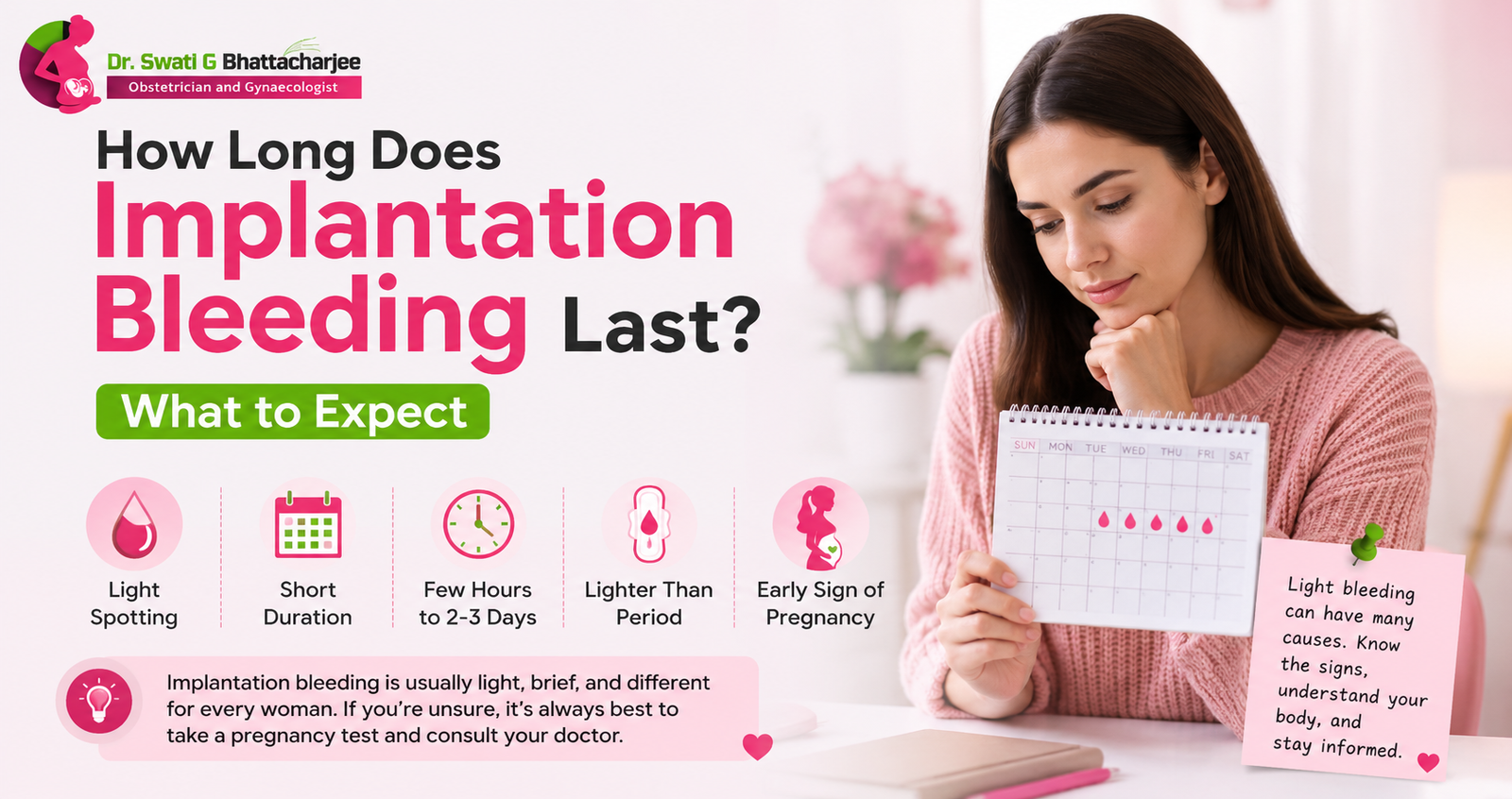
In most cases, implantation bleeding lasts:
- A few hours
- 1 to 2 days
- Occasionally up to 3 days
The bleeding is usually very light and does not become heavier over time. Unlike a regular period, implantation bleeding generally stays minimal and stops on its own.
If bleeding continues for several days, becomes heavy, or is accompanied by severe pain, it’s important to consult a gynecologist.
What Does Implantation Bleeding Look Like?
Implantation bleeding is often lighter than a menstrual period and may differ in color and flow.
Common Signs of Implantation Bleeding
- Light pink spotting
- Brown or rust-colored discharge
- Very light flow
- No large blood clots
- Mild or no cramping
Many women notice implantation bleeding only when wiping or as small spots on underwear.
How Do I Know When It’s Implantation Bleeding?
Women frequently ask: How do I know when it’s implantation bleeding?
Here are some signs that can help distinguish implantation bleeding from a regular period:
1. Timing
Implantation bleeding usually occurs:
- 6 to 12 days after ovulation
- Around one week before your expected period
2. Flow Is Light
Implantation spotting does not soak pads or tampons like a normal period.
3. Color Is Different
The blood is often:
- Pink
- Light brown
- Rust-colored
Bright red heavy bleeding is more likely to be menstrual bleeding.
4. Mild Symptoms
Some women may also experience:
- Mild cramps
- Breast tenderness
- Fatigue
- Mood changes
- Bloating
These are common early pregnancy symptoms.
Can Implantation Bleeding Last 5 Days?
Another common question is: Can implantation bleeding last 5 days?
Typically, implantation bleeding lasts no longer than 2 to 3 days. However, every woman’s body is different, and some may notice light spotting for slightly longer.
If spotting lasts 5 days or more, becomes heavy, or resembles a normal period, it may not be implantation bleeding. In such cases, medical advice is recommended to rule out:
- Hormonal imbalance
- Infection
- Early pregnancy complications
- Other gynecological conditions
How Many Weeks Pregnant Are You When Implantation Bleeding Happens?
Implantation bleeding generally occurs very early in pregnancy.
Most women are:
- Around 3 to 4 weeks pregnant
- Approximately 1 to 2 weeks after conception
At this stage, many women may not even realize they are pregnant yet because they have not missed their period.
How to Know If Implantation Is Finished?
Many women wonder: How to know if implantation is finished?
Some signs that implantation may be complete include:
- Spotting stops completely
- Mild cramps disappear
- Pregnancy symptoms begin increasing
- A pregnancy test becomes positive after a few days
Once implantation is complete, the body starts producing the pregnancy hormone hCG, which is detected through pregnancy tests.
Implantation Bleeding vs Period
Because implantation bleeding often occurs close to the expected period date, it can easily be mistaken for menstruation.
Implantation Bleeding
- Very light spotting
- Pink or brown color
- Lasts 1–3 days
- Mild cramps
- No heavy flow
Menstrual Period
- Heavy bleeding
- Bright red blood
- Lasts 3–7 days
- Strong cramps
- Blood clots may be present
Understanding these differences can help you better identify early pregnancy signs.
When Should You Take a Pregnancy Test?
If you suspect implantation bleeding, avoid testing too early.
Best Time for a Pregnancy Test
- After your missed period
- Or at least 10–14 days after ovulation
Testing too soon may result in a false negative because hCG hormone levels may still be too low to detect.
Using first-morning urine can improve test accuracy.
Early Pregnancy Symptoms Alongside Implantation Bleeding
Some women experience additional symptoms during implantation and early pregnancy, including:
Fatigue
Hormonal changes may make you feel unusually tired.
Breast Tenderness
Breasts may feel swollen or sensitive.
Mild Cramping
Light cramping is common during implantation.
Mood Swings
Hormonal fluctuations can affect emotions.
Frequent Urination
Some women notice this symptom very early.
Every pregnancy experience is unique, so symptoms can vary from person to person.
When to See a Doctor
Although implantation bleeding is generally harmless, certain symptoms should never be ignored.
Consult a gynecologist if you experience:
- Heavy bleeding
- Severe abdominal pain
- Dizziness
- Fever
- Large blood clots
- Bleeding lasting more than a few days
Professional evaluation can help ensure your reproductive health and pregnancy safety.
Tips During Early Pregnancy
If you think implantation has occurred, taking care of your health is important.
Eat Nutritious Foods
Include fruits, vegetables, protein, and folic acid-rich foods in your diet.
Stay Hydrated
Drink enough water throughout the day.
Avoid Alcohol and Smoking
These can affect early pregnancy development.
Get Enough Rest
Your body undergoes major hormonal changes during early pregnancy.
Avoid Self-Medication
Always consult a doctor before taking medicines.
Final Thoughts
Implantation bleeding is a common early pregnancy symptom that can happen when the fertilized egg attaches to the uterus lining. In most cases, implantation bleeding lasts only a short time and remains light in flow.
Knowing the difference between implantation bleeding and a regular period can help reduce confusion and help you recognize early signs of pregnancy more confidently.
If you have concerns about unusual bleeding, fertility, or pregnancy symptoms, consulting a qualified gynecologist is the best step toward proper care and peace of mind.
Consult Dr. Swati G Bhattacharjee for Expert Women’s Healthcare
If you are experiencing early pregnancy symptoms, irregular bleeding, fertility concerns, or need professional gynecological guidance, consult Dr. Swati G Bhattacharjee for trusted and compassionate care.
Why Choose Dr. Swati G Bhattacharjee?
- Expert pregnancy and women’s health consultation
- Personalized fertility and gynecological care
- Guidance for early pregnancy concerns
- Compassionate patient-centered treatment
Book your consultation today and get expert support for your reproductive health journey.
Read More:
- When Do Pregnancy Symptoms Start After Implantation Bleeding?
- Can You Have Pregnancy Symptoms Before Implantation?
- Pregnancy Implantation Symptoms: Early Signs You Should Know
Visit Us:
