
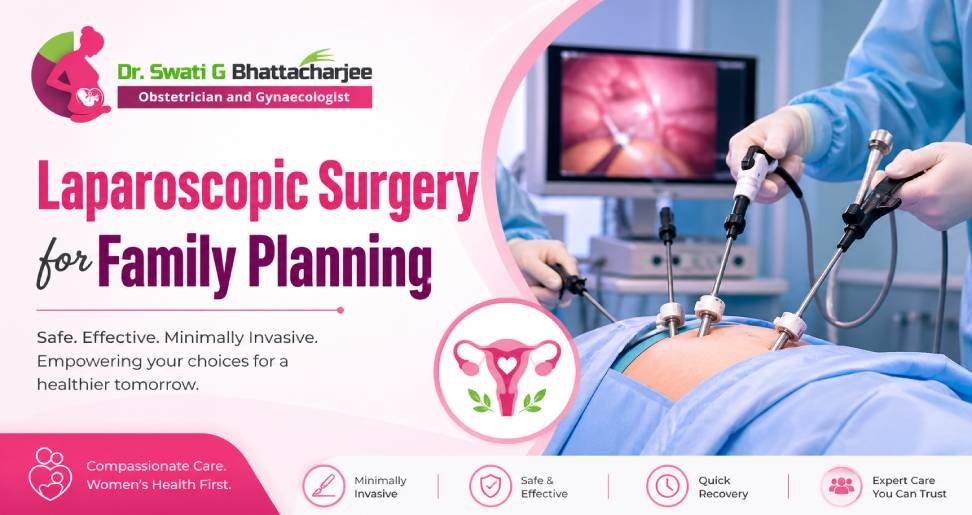
Laparoscopic surgery for family planning is a modern, minimally invasive procedure widely used for permanent contraception. It offers a safe, effective, and quick solution for individuals or couples who have decided not to have more children. With advancements in medical technology, laparoscopy has become a preferred choice due to its reduced recovery time, minimal scarring, and high success rates.
In this blog, we will explore everything you need to know about laparoscopic surgery for family planning, including its procedure, benefits, risks, recovery, and related aspects.
What is Laparoscopic Surgery for Family Planning?
Laparoscopic surgery for family planning, often referred to as laparoscopic sterilization or tubal ligation, is a surgical procedure in which a woman’s fallopian tubes are blocked, cut, or sealed. This prevents the egg from reaching the uterus and stops sperm from fertilizing the egg.
The procedure is performed using a laparoscope—a thin tube with a camera that allows the surgeon to view the internal organs through small incisions in the abdomen.
Why Choose Laparoscopy for Family Planning?
Laparoscopic procedures are preferred over traditional open surgeries due to several advantages:
- Minimally invasive technique
- Smaller incisions and less scarring
- Reduced pain after surgery
- Short hospital stay
- Faster return to normal activities
These benefits make it a convenient and efficient option for long-term contraception.
Procedure of Laparoscopic Family Planning Surgery
The procedure typically involves the following steps:
- Preparation: The patient is given general anesthesia.
- Small Incision: A tiny incision is made near the navel.
- Insertion of Laparoscope: The laparoscope is inserted to visualize the internal organs.
- Sealing the Tubes: The fallopian tubes are sealed using clips, rings, or cauterization.
- Closure: The instruments are removed, and the incision is closed.
The entire procedure usually takes around 20–30 minutes.
Laparoscopy Family Planning Success Rate
One of the most important considerations is the effectiveness of the procedure. The laparoscopy family planning success rate is extremely high, typically above 99%. This makes it one of the most reliable methods of permanent contraception.
However, it is important to note that while rare, failure can occur due to improper sealing or natural recanalization of the tubes.
Laparoscopy Family Planning Recovery Time
Recovery is one of the biggest advantages of laparoscopic surgery.
Typical Recovery Timeline:
- Same-day discharge or within 24 hours
- Mild discomfort for 2–3 days
- Return to normal activities within a week
The laparoscopy family planning recovery time is significantly shorter compared to traditional surgery. Most patients can resume daily routines quickly, although heavy lifting and strenuous activities should be avoided for a few days.
Laparoscopy Family Planning Side Effects
While laparoscopic sterilization is generally safe, like any surgical procedure, it may have some side effects.
Common Side Effects:
- Mild abdominal pain
- Temporary bloating
- Shoulder pain (due to gas used during surgery)
- Fatigue
Rare Complications:
- Infection
- Bleeding
- Damage to nearby organs
Understanding laparoscopy family planning side effects helps patients make informed decisions and prepare for the recovery process.
Who is an Ideal Candidate?
Laparoscopic family planning is suitable for:
- Women who have completed their family
- Individuals seeking permanent contraception
- Those who want a minimally invasive procedure
- Patients in good overall health
It is not recommended for individuals who are unsure about permanent sterilization, as reversal procedures are complex and not always successful.
Comparison with Other Laparoscopic Procedures
Laparoscopy is used in various medical conditions beyond family planning. For example, appendicitis laparoscopic surgery is another common procedure where the appendix is removed using similar minimally invasive techniques.
Both procedures share benefits such as:
- Smaller incisions
- Faster healing
- Lower risk of complications
This highlights the versatility and effectiveness of laparoscopic methods in modern medicine.
Benefits of Laparoscopic Family Planning
Here are some key benefits:
1. Permanent Solution
Once done, it eliminates the need for other contraceptive methods.
2. Quick Procedure
The surgery is completed within a short time.
3. Minimal Downtime
Patients can return to daily life quickly.
4. High Safety Profile
Low risk of complications when performed by experienced surgeons.
Risks and Considerations
Although safe, patients should consider the following:
- It is permanent and not easily reversible
- Does not protect against sexually transmitted infections (STIs)
- Requires proper medical consultation before opting for the procedure
Post-Surgery Care Tips
To ensure smooth recovery:
- Follow your doctor’s instructions carefully
- Avoid heavy lifting for a few days
- Keep the incision area clean and dry
- Attend follow-up appointments
- Report any unusual symptoms immediately
FAQs About Laparoscopic Surgery for Family Planning
Ans :- The procedure is performed under anesthesia, so there is no pain during surgery. Mild discomfort may occur afterward.
Ans :- Most patients recover within a week, with minimal restrictions.
Ans :- The failure rate is very low, with a success rate of over 99%.
Ans :- Long-term complications are rare, and most women experience no significant issues.
Conclusion
Laparoscopic surgery for family planning is a safe, effective, and convenient option for individuals seeking permanent contraception. With its high success rate, minimal recovery time, and low risk of complications, it has become a widely preferred choice in modern healthcare.
Understanding key aspects such as laparoscopy family planning side effects, laparoscopy family planning success rate, and laparoscopy family planning recovery time helps individuals make informed decisions. Additionally, its similarity to procedures like appendicitis laparoscopic surgery demonstrates its reliability and efficiency.
Before opting for this procedure, it is always advisable to consult a qualified healthcare professional to ensure it aligns with your personal and medical needs.
Have A Look :-
